Understanding the Evolution of Watch Straps from 1930’s to 1970’s, and Why This is Relevant Today - Part 2 (English ver.)
Written and photographed by Scott Kim (@acierinox_watches), a Rarefied Seoul contributor.
Edited by Jay Chang
Then What Makes a Good Strap?
When it comes to leather straps, the first important characteristic to note is the tanning process - chrome-tanned and vegetable-tanned leathers are notably different. Vegetable-tanned leather is more sensitive to moisture and tends to mark easily through daily wear; however, with time it develops a deeper patina and a natural surface sheen. Chrome-tanned leather, by contrast, generally offers better resistance to water and staining, keeping a more consistent look as it ages. One is not inherently better - the choice of leather often comes down to how the strap will be used and the wearer’s personal style.
Strap thickness is another key factor to consider. Personally, I find that a thickness of 2.0 to 2.3mm feels the most natural on a vintage watch. Here, the strap doesn’t overwhelm the proportions of the watch while still offering enough durability, especially if it is made with proper internal reinforcement. This allows the watch head to sit comfortably on the wrist without feeling stiff or unnaturally high. That being said, thickness does not equate to stiffness. A thicker strap can still be supple depending on the leather and construction, just as a thinner strap is not necessarily flexible. What matters more than such empirical measurements is the overall impression the strap creates on the wrist.
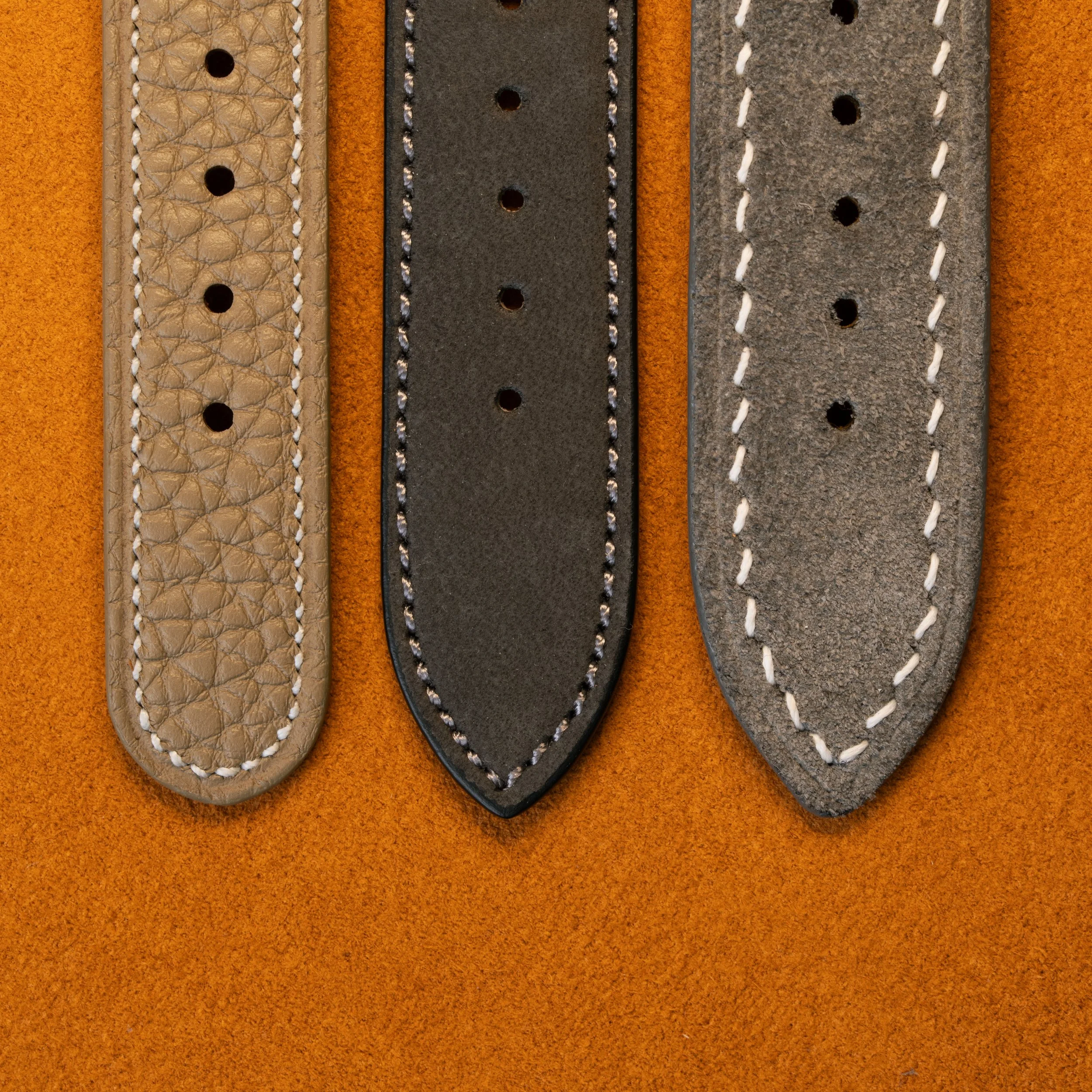
Different stitching intervals and techniques. From left to right: 1.5mm hand, 1.7mm machine, and 2.7mm hand stitching.
Micro-stitching can be understood in a similar vein. Historically, closely spaced stitching was a practical solution to improve durability, helping prevent the leather edges from separating over time. Here, micro-stitching refers to intervals of 2.0mm or less. Today, thanks to improvements in reinforcement materials and construction methods, such dense stitching is no longer a structural necessity. Instead, it now functions more as an important visual element that completes a vintage-inspired look. Interestingly, many ready-to-wear straps that feature micro-stitching also tend to show a higher overall level of finishing.
Lug width is another crucial detail to consider when choosing straps. Vintage watches often have lug widths that don’t fall neatly into whole numbers. In these cases, the strap material and structure are important considerations. If the lug width measures around 16.0 to 16.4mm, a 16mm strap with a standard spring bar is usually the most suitable option. If it’s closer to 16.6 to 16.9mm, a 17mm strap is often the better choice.
For lug widths measuring around 16.5mm, the decision becomes more nuanced. Here, 17mm straps made with softer, more pliable leathers could work. Otherwise, 16mm straps with firmer leather and build place less stress on the lugs and create a relatively balanced overall fit. In such cases, standard springs bars generally work better than quick-release bars. Of course, the ideal solution would be to craft bespoke straps for the peculiar lug widths.
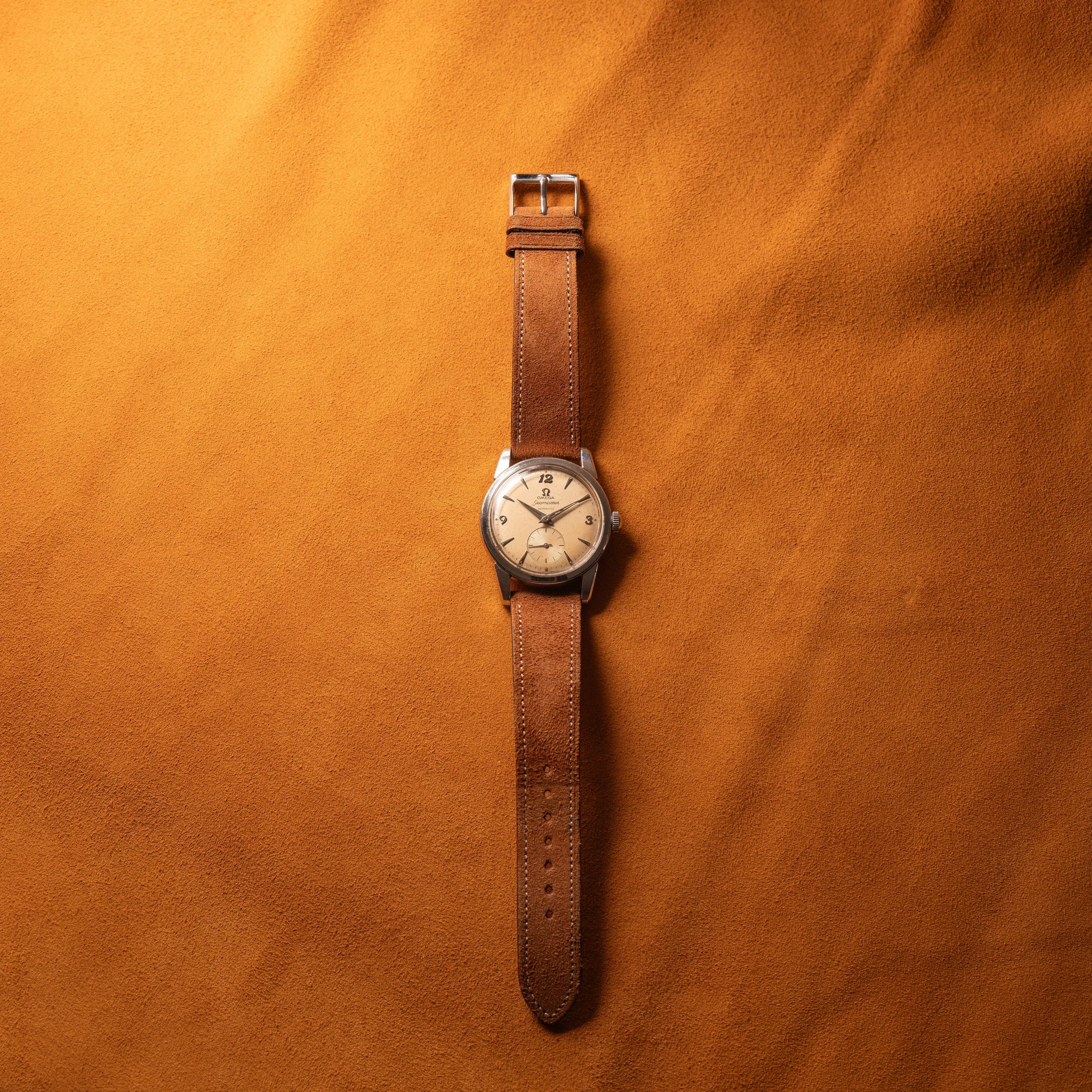
A 1955 Omega ref. 2848 fitted with an 18–16 light brown suede calf strap.
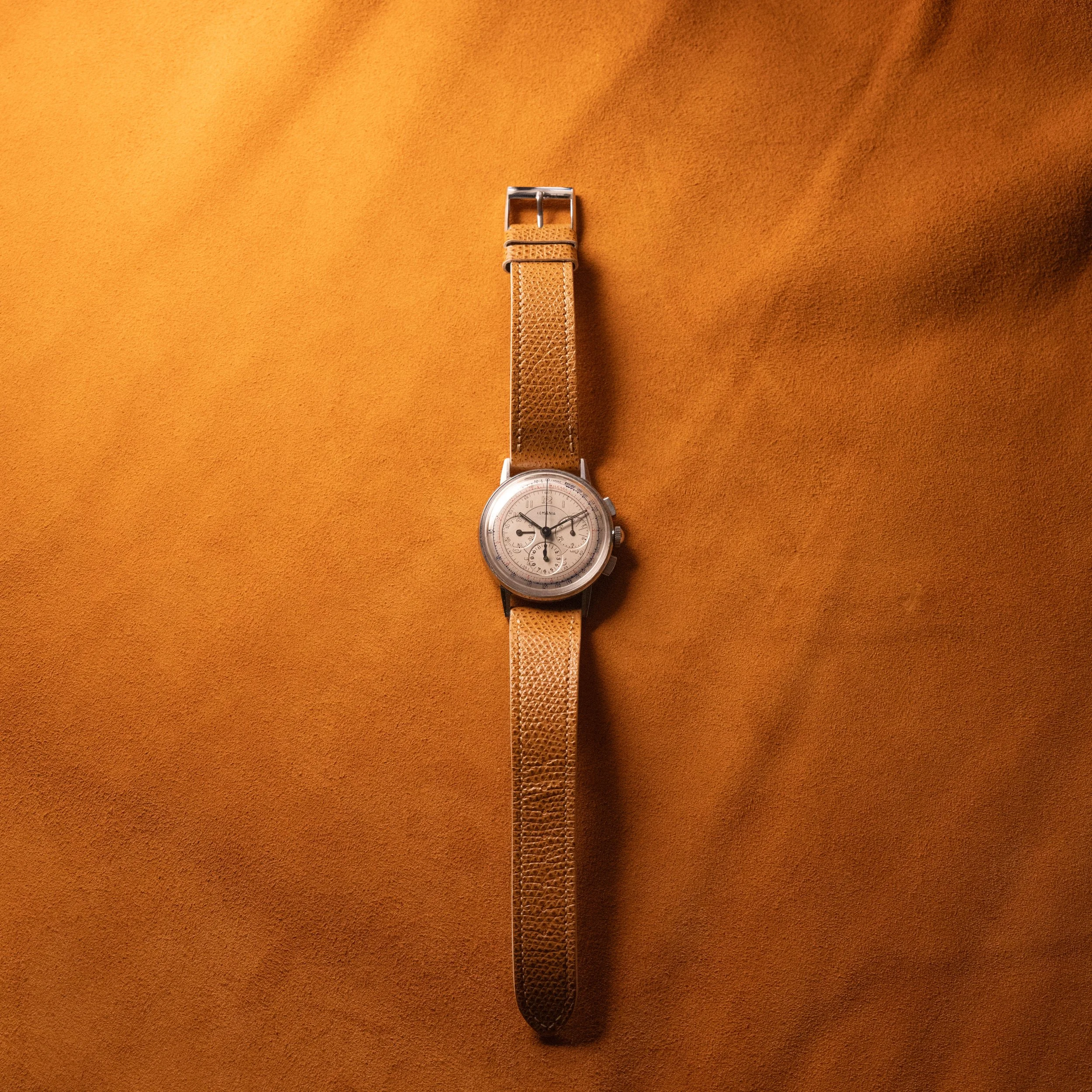
A late-1940’s Lemania three-register chronograph fitted with an 18–16 tan grained strap.
Ultimately, what matters more than measurements and structural considerations is how the watch and strap pairing looks on the wrist. With vintage watches that often feature patina, subtle mismatches in colour or tone can actually add depth, creating a more natural and interesting visual tension.
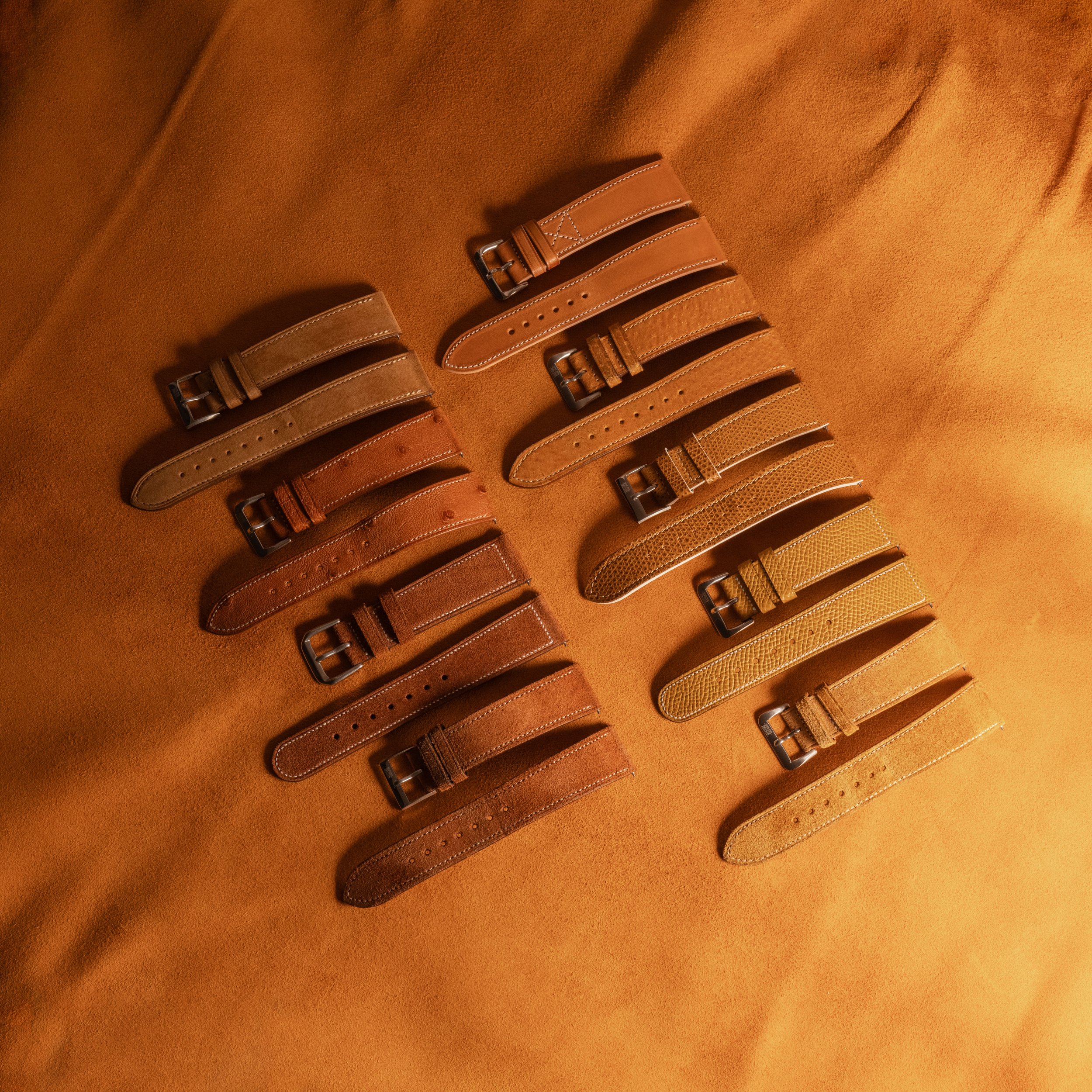
A selection of warm-toned straps well suited to vintage watches.
Straps crafted with warm toned leathers like brown suede, beige pigskin, or camel calf work reliably well with vintage timepieces. This is because such colours align naturally with key elements such as dial patina, aged lume, and case oxidation.
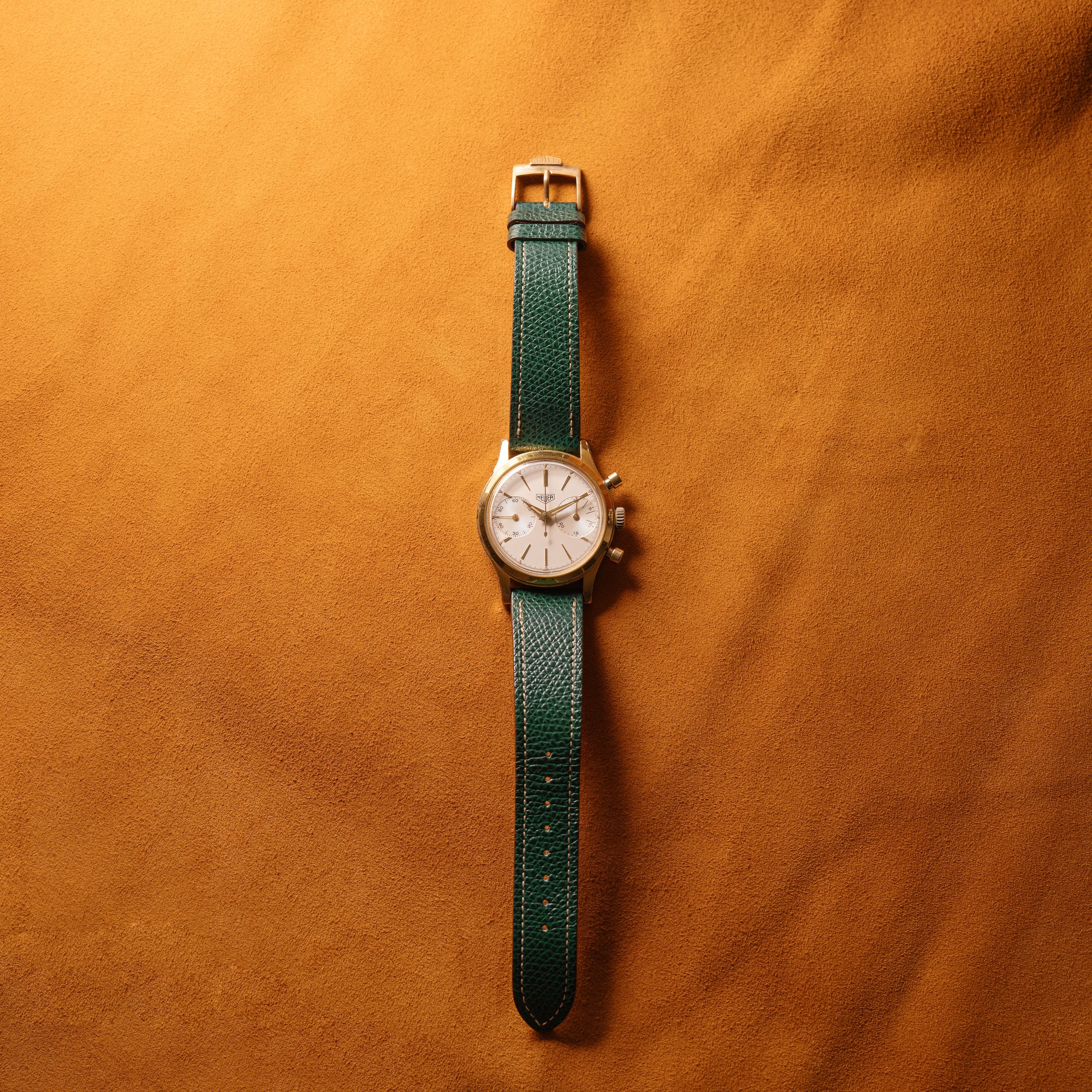
A 1960’s Heuer Pre-Carrera Ref. 3645, paired with an 18–16 green grained strap.
Of course, warm toned straps are not the only right answer. If you only own one watch, sticking to “safe” combinations makes perfect sense. But with a larger collection, the approach can and should shift. Sometimes a peculiar strap can work unexpectedly with a specific watch; it may not work across the board, but for that one piece, it can feel exactly right. This kind of experimentation adds fun variety and character to a collection.
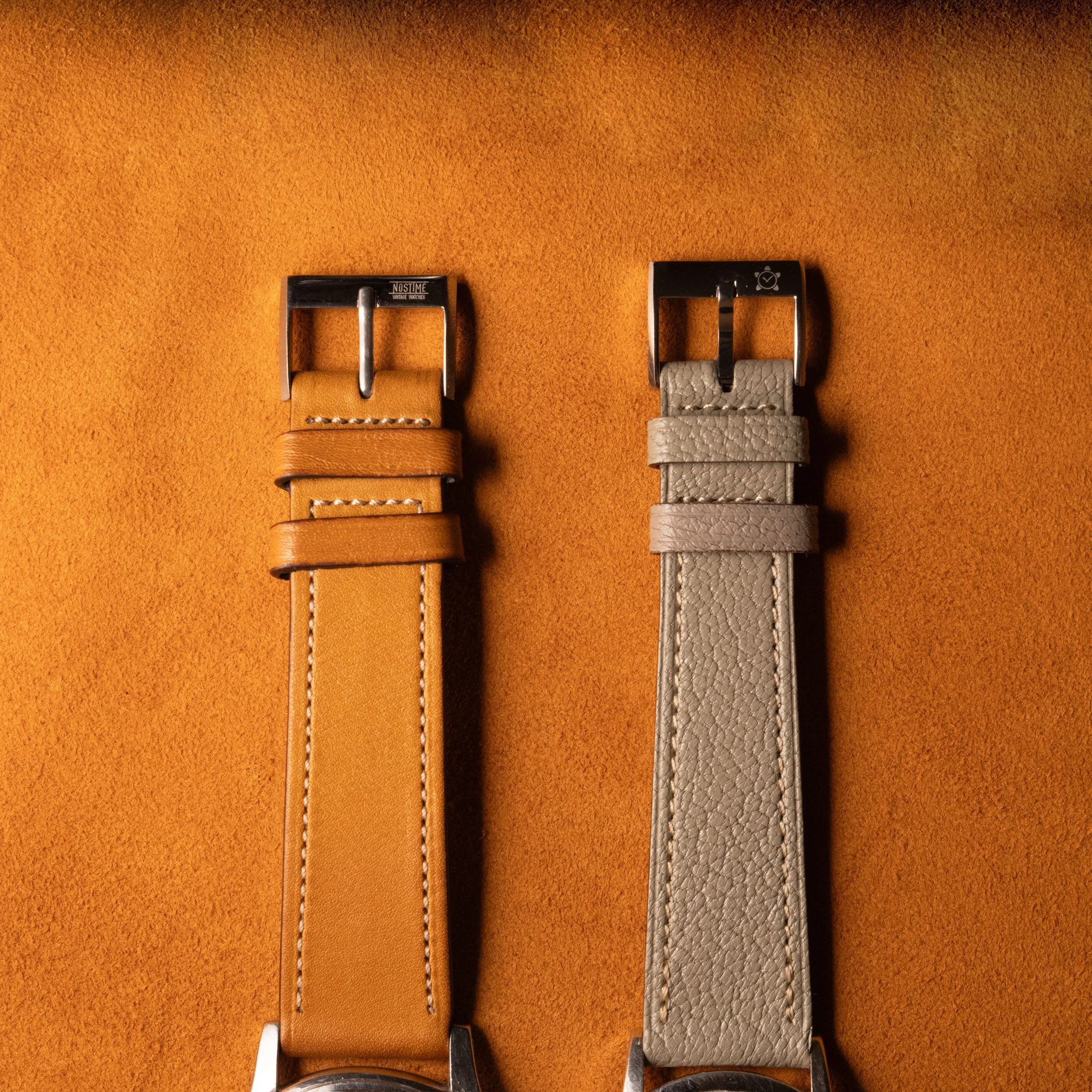
Different taper proportions: 18–16 on the left, 18–14 on the right.
Strap taper is another crucial element that must be discussed. Tapering isn’t just about looks; the way a strap narrows towards the buckle has a direct impact on both comfort and visual balance. As the strap becomes slimmer at the buckle, the watch head stands out more clearly, creating a more defined silhouette on the wrist.
An 18–16mm taper is the most common choice today, and this works well for most watches. A more pronounced 18–14mm taper, however, serves a clearer purpose. It allows for greater freedom of movement and reduces bulk at the underside of the wrist, creating better balance with vintage watches that tend to be more elegant. Here, the strap takes the back seat to give the watch the spotlight, and creates an impression that is undeniably sexy.
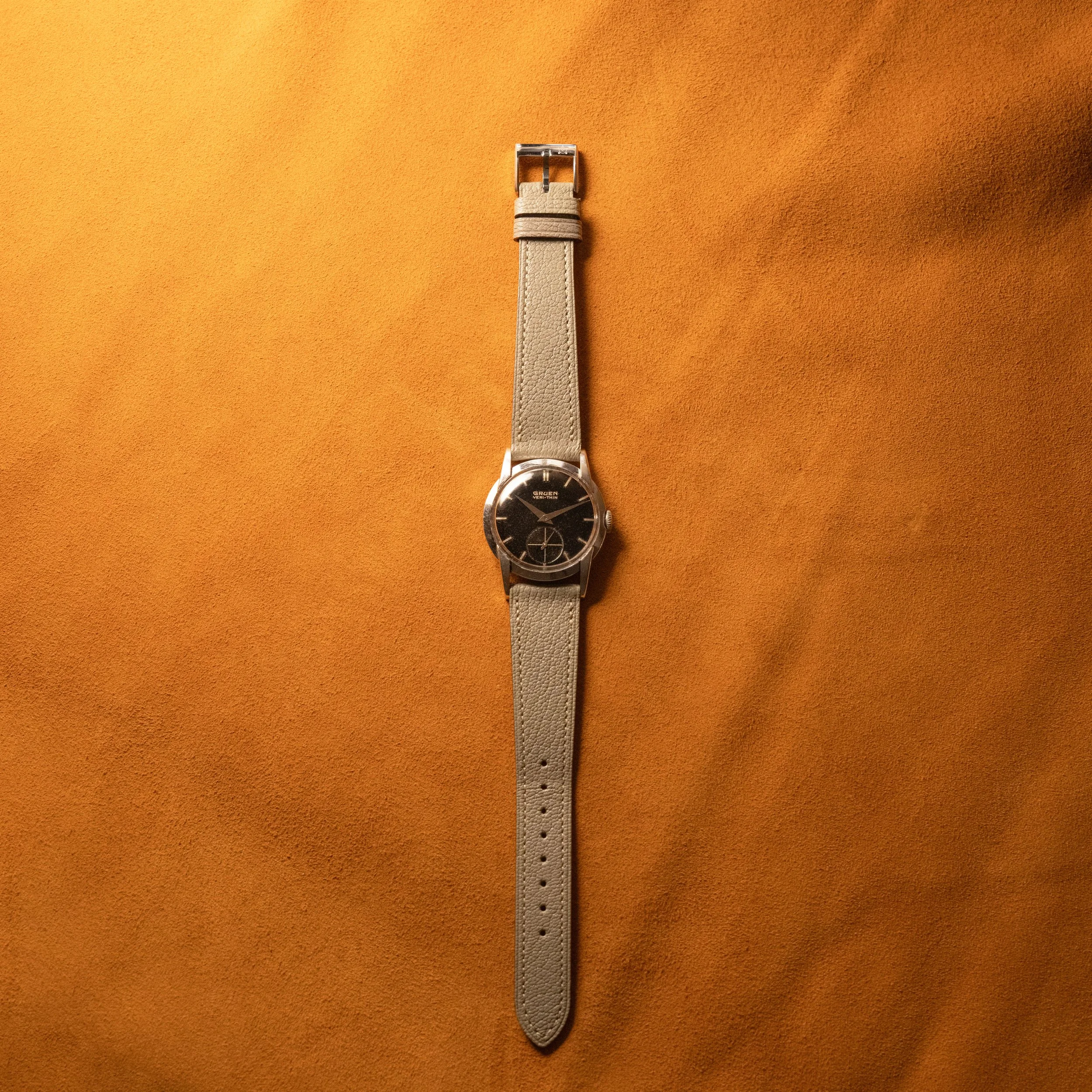
A 1950’s Gruen fitted with an 18–14 tapered strap in beige French goat leather (chevre).
Interestingly, many vintage and neo-vintage timepieces with 18mm or 19mm lug widths originally featured 14mm buckles. These watches were intentionally designed with a strong taper in mind, with the buckle playing an active role in the overall visual package. In such cases, using the original buckle isn’t just about completeness. Rather, it represents the purist spirit to respect the balance of the original design.
Ultimately, the focus should not be on what makes a “good” strap and instead be on which strap best suits a specific watch. Straps are ephemeral - it wears and ages until it is eventually replaced. This is precisely why there’s no reason to limit yourself to only the safest choices. Occasionally, an unexpected colour, an unusual taper, or an unfamiliar texture can reveal a side of your watch you hadn’t noticed before. Changing the strap doesn’t change the watch - it simply gives you another way of appreciating it.