On “Vintage Watches”
Introduction
Many of us consider ourselves seasoned vintage watch collectors, but we seldom consciously consider what exactly defines a vintage watch. However, “What is a vintage watch?” is probably the first question a new collector freshly entering the scene of non-retail watch collecting experience faces.
Collectors often have different personal definitions for what makes a vintage watch, but I believe there are a couple standards that are fairly widely accepted by the vintage watch collecting community globally. Together with three other Korean watch collectors (@gobugiandco / @watchanalyst_david / @seoulwatchguy), I recently founded a local vintage watch collecting community called “Sigan Society” (@sigan_society). Given the modern-oriented watch collecting climate in Seoul, all members are interested in vintage watches, but not everyone is a seasoned vintage watch collector. So, I thought this was an opportune moment to address this question more formally.
My Personal Take
Broadly, I would define the 1930’s to the early 1970’s as true “vintage”. Personally, anything before this would be considered “antique”. I feel there is a slight difference in tone between “vintage” and “antique” that suits this division and categorisation; vintage is still relevant and can easily be worn and used today, while antique - in this case - refers to a time before proper wristwatches were envisioned.
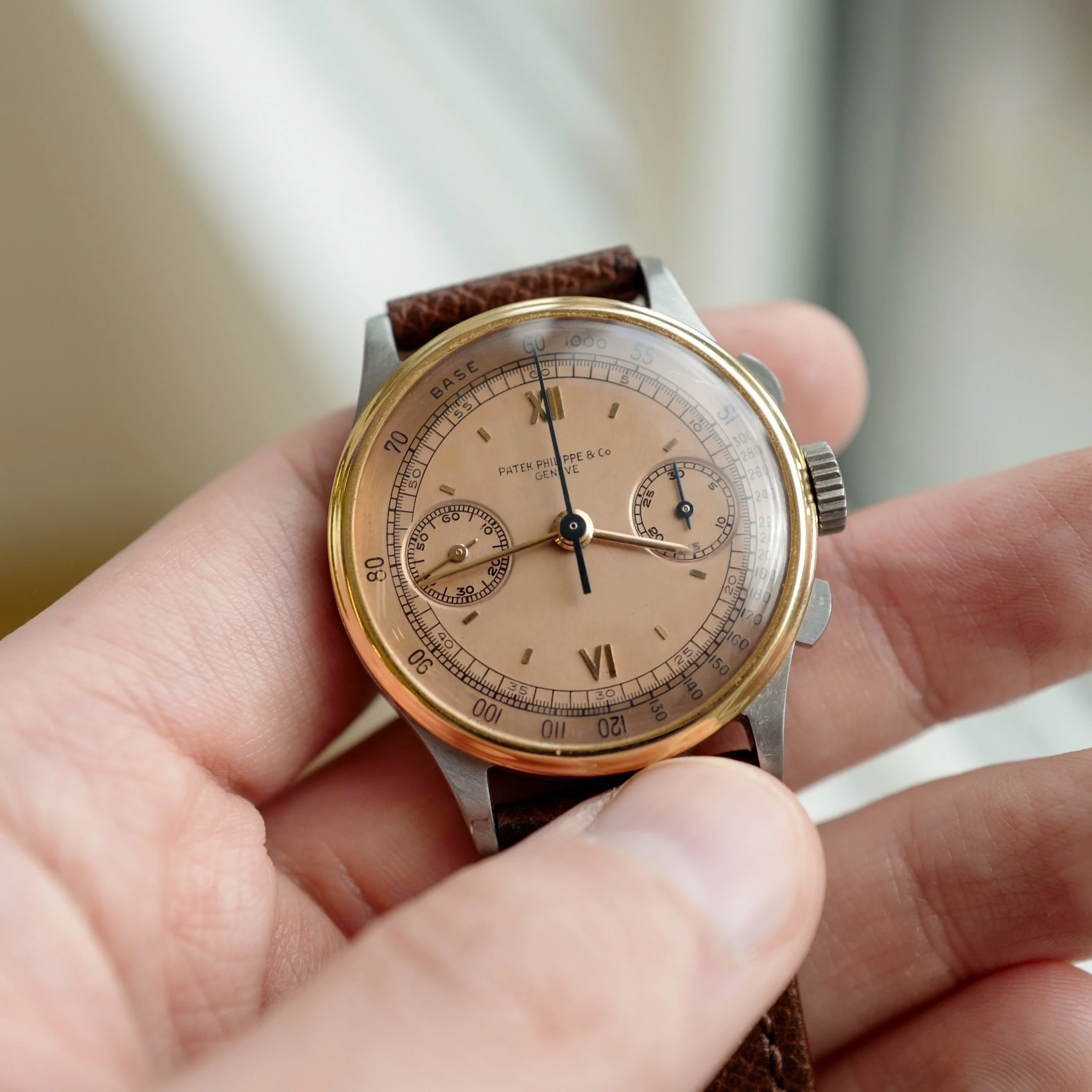
A 1930/1940’s Patek Philippe ref. 130 in an incredibly rare “double two-tone” configuration - the watch has a two-tone salmon dial and a two-tone case composed of pink gold and stainless steel.
Then, I would categorise the late 1970’s to the 1990’s as “neo-vintage”. Of course, there are references that have been produced for many decades continuously, so this time period designation would refer to the date of release. Most notably, some iconic and classic-leaning Breguet references have been produced for a very long time. For example, the tourbillon ref. 3357 was released in 1995 but can still be found in the catalogue today.
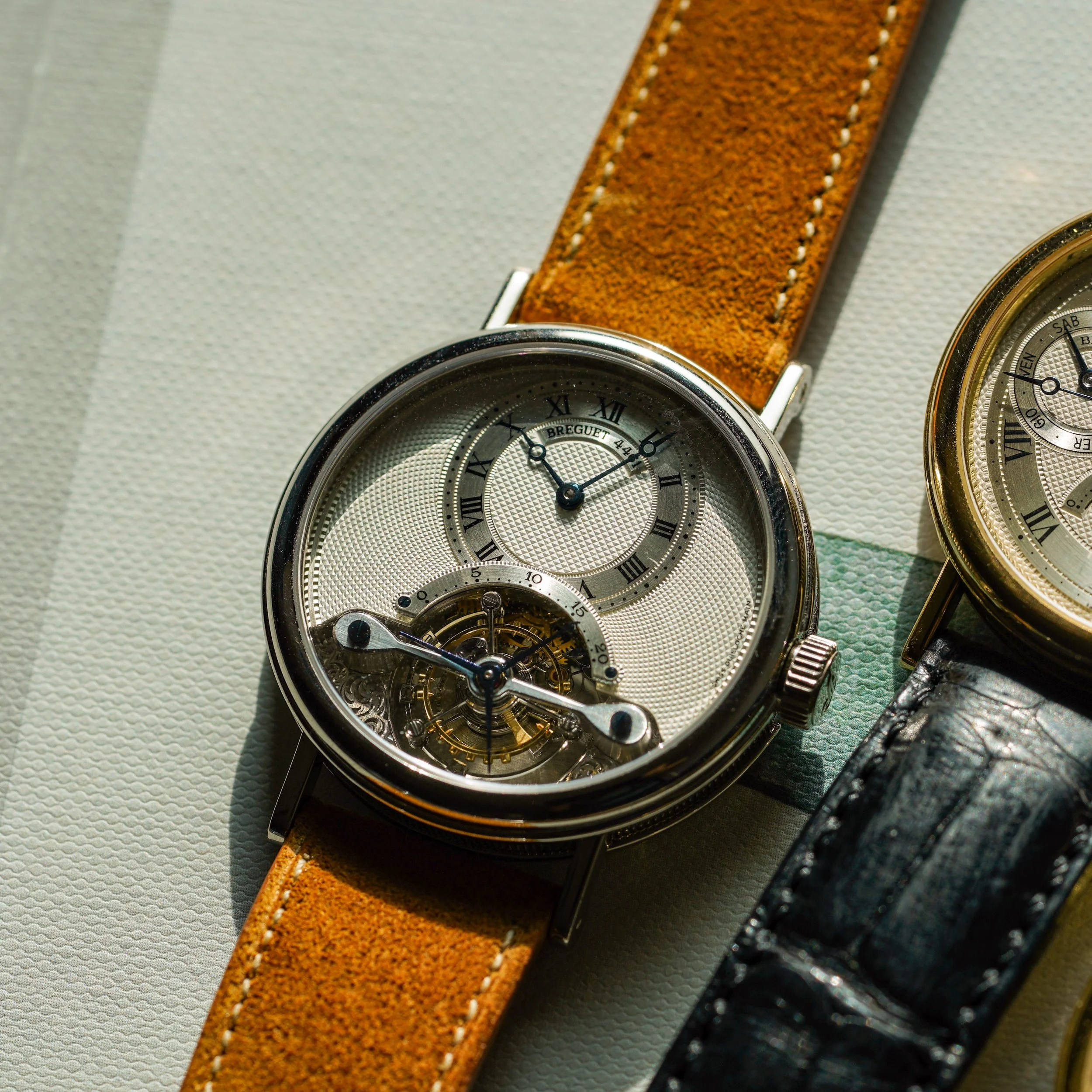
A “neo-vintage” Breguet tourbillon, ref. 3357. This reference was introduced in 1995 but can still be found in the current Breguet catalogue.
A recently produced Breguet 3357 is clearly a modern watch, but the spirit and the aesthetics are in line with neo-vintage. So, I would consider such a watch both neo-vintage and modern. I do think the distinction between neo-vintage and modern is one that will continuously shift as time passes; it is not as clear-cut as the distinction between vintage and neo-vintage.
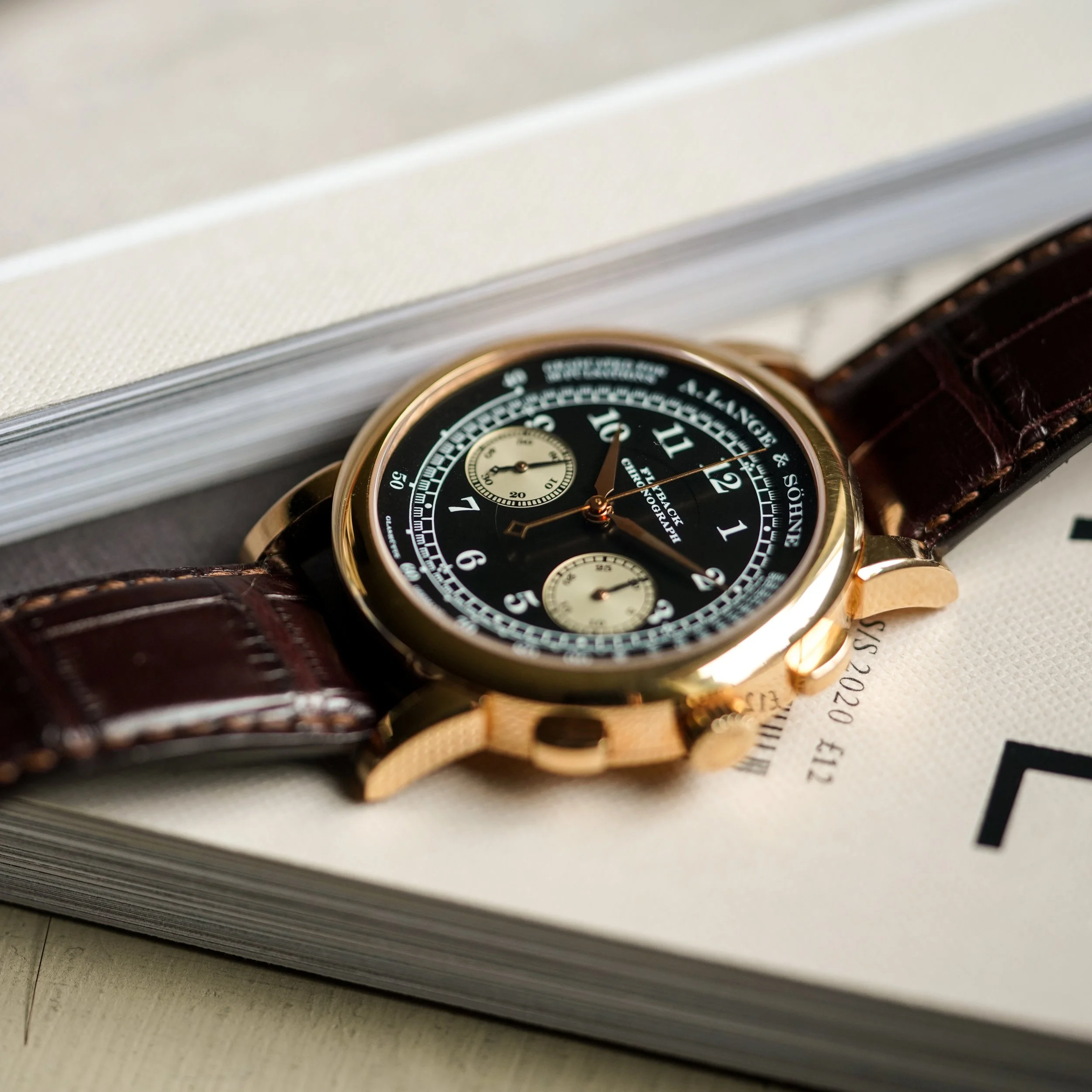
A “modern” A Lange & Sohne first series 1815 chronograph. I can imagine this watch will soon be considered neo-vintage.
Reasoning - Vintage
Indeed, aside from differences in design, there are more empirical reasons for such definitions. The advent of CAD (computer-aided design) softwares and their popularisation in the Swiss watch industry would be the landmark divider that separates the different eras of watchmaking - vintage and neo-vintage.
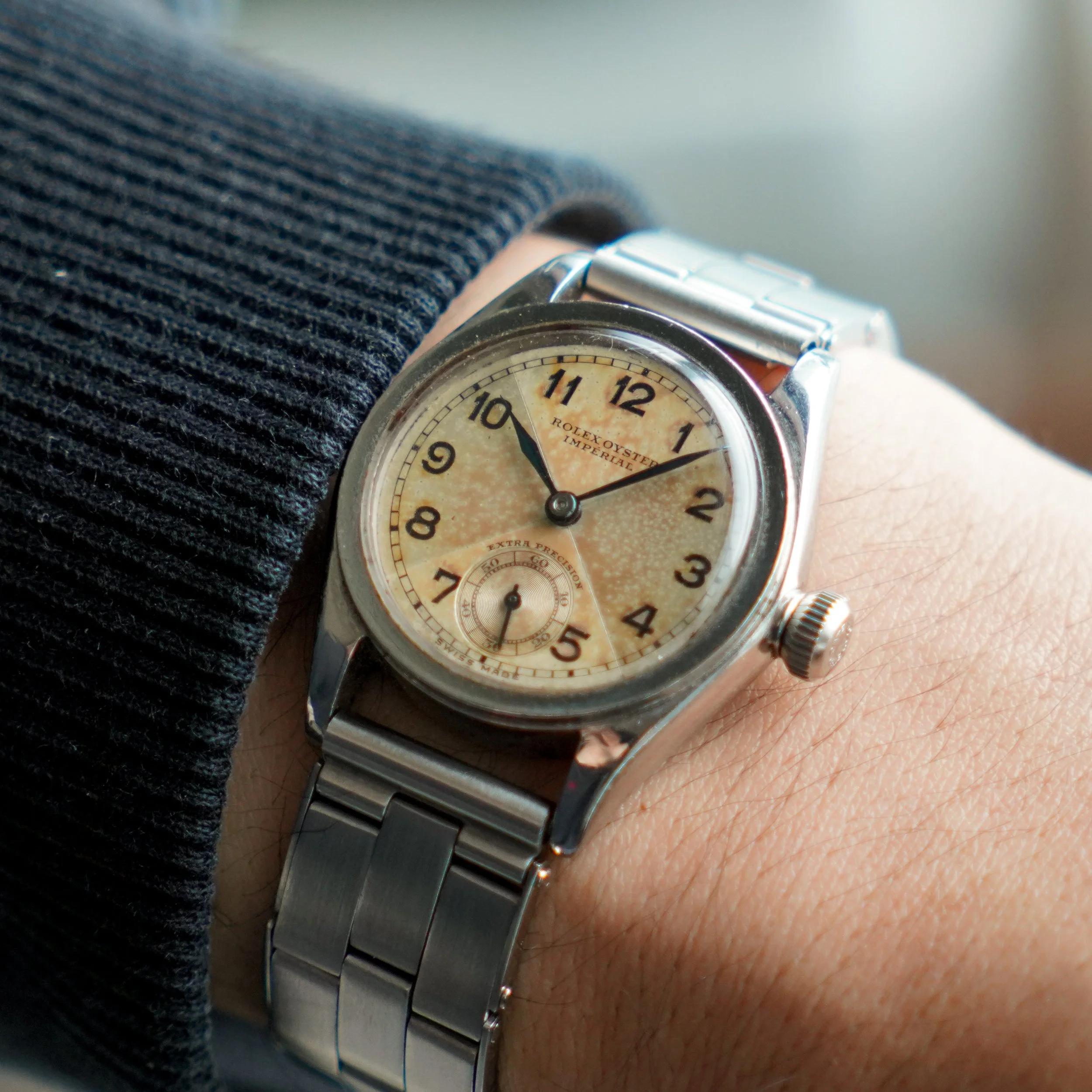
A 1930’s vintage Rolex oyster imperial with a rare “papillon” dial.
So, I define the 1930’s to the early 1970’s as the true “vintage” era because this period was when watches were designed and produced without the help of such softwares. From the 1970’s and onwards, CAD softwares were clearly implemented in commercial applications including watchmaking. Vintage watches were - though perhaps less precise - made with far greater human touch. To my eyes, they often feel more organic and warm.
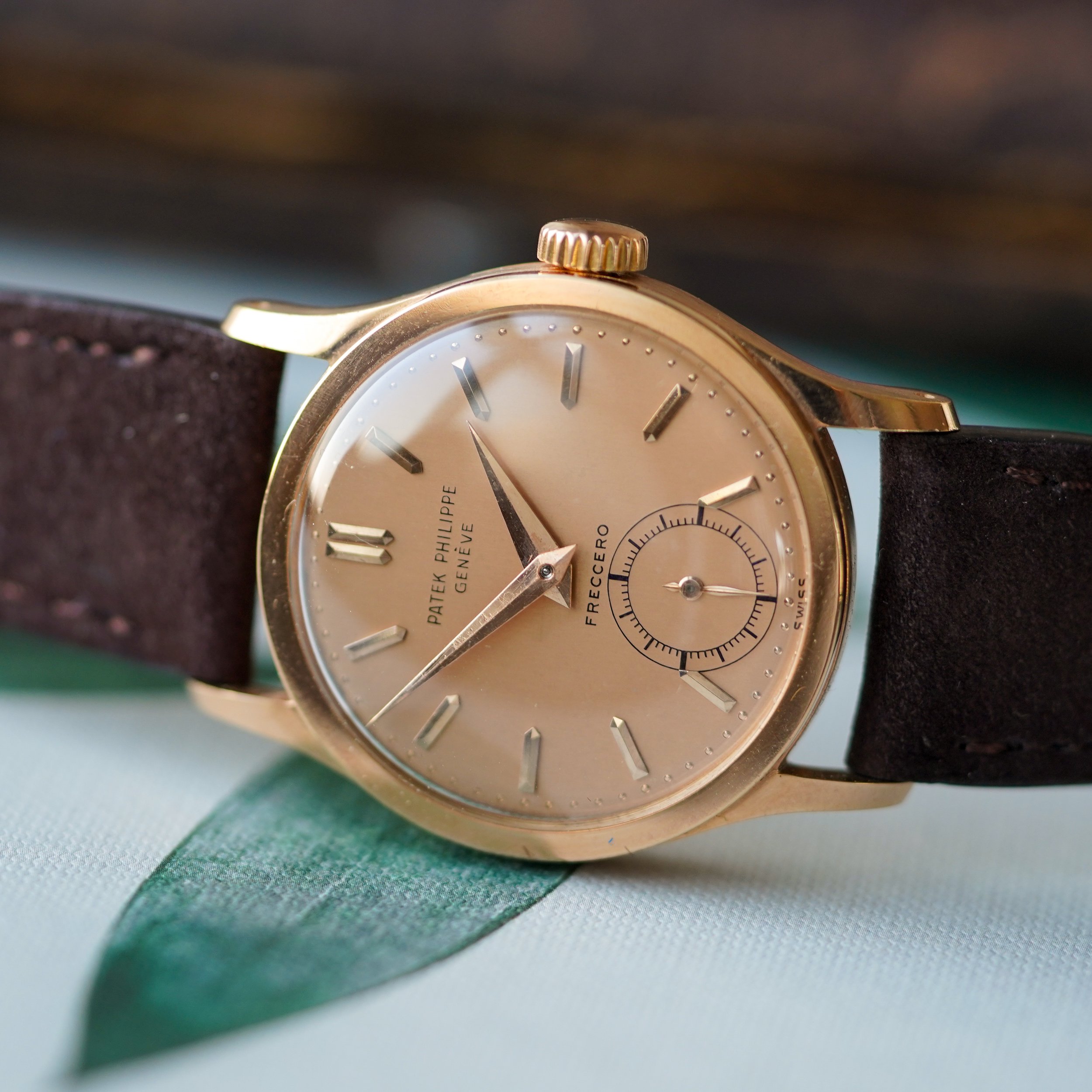
A 1950’s vintage Patek Philippe ref. 96 in a rare pink-on-pink configuration, retailed by Freccero.
This transitional period moving out of “vintage” was a turbulent time where - along with CAD softwares - quartz movements represented another groundbreaking shift in the global watch industry. The majority of Swiss watch brands - especially many small ones making very unique and interesting watches - disappeared during this time, and scalability and brand size became more important than ever. The remaining brands, also, transitioned to become more “luxury” oriented; mechanical watches were no longer tools only, but also symbols of wealth and status. So, one could make the argument that the definition of “vintage” extends beyond how watches were made and defines the overall culture surrounding the industry.
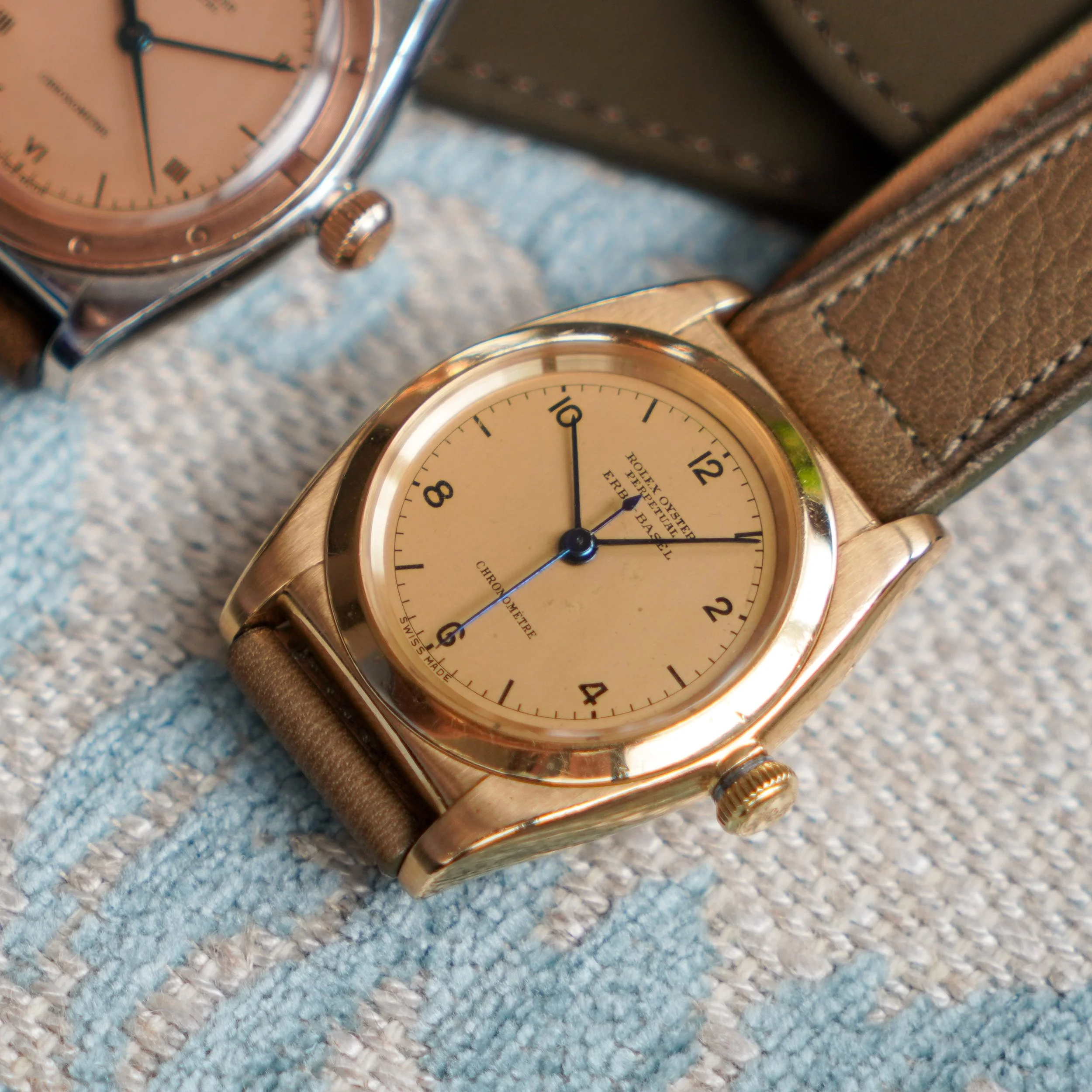
A 1940’s vintage Rolex bubbleback ref. 3131 in 18k yellow gold, retailed by Erbe Basel.
Reasoning - Neo-Vintage
The distinction between” neo-vintage” and “modern”, as mentioned, is more subjective and shifting with time. While some would argue that watches released in the 1990’s are modern and others would argue that watches released in the 00’s are neo-vintage, I personally draw the line at the new millennium.
This covers the rough production times of important landmark references including the Patek Philippe references 3940 and 3970. The 3940’s regular production ran from 1985 to 2007, with the last series (the third series) released in 1995. The regular run of the 3970 - in my opinion an even more important reference that continues Patek Philippe’s prestigious lineage of perpetual calendar chronographs - was produced between 1986 and 2004. The fourth and final series of the 3970 was produced between 1994 and 2004. I believe there would be little debate in calling these references “neo-vintage”.
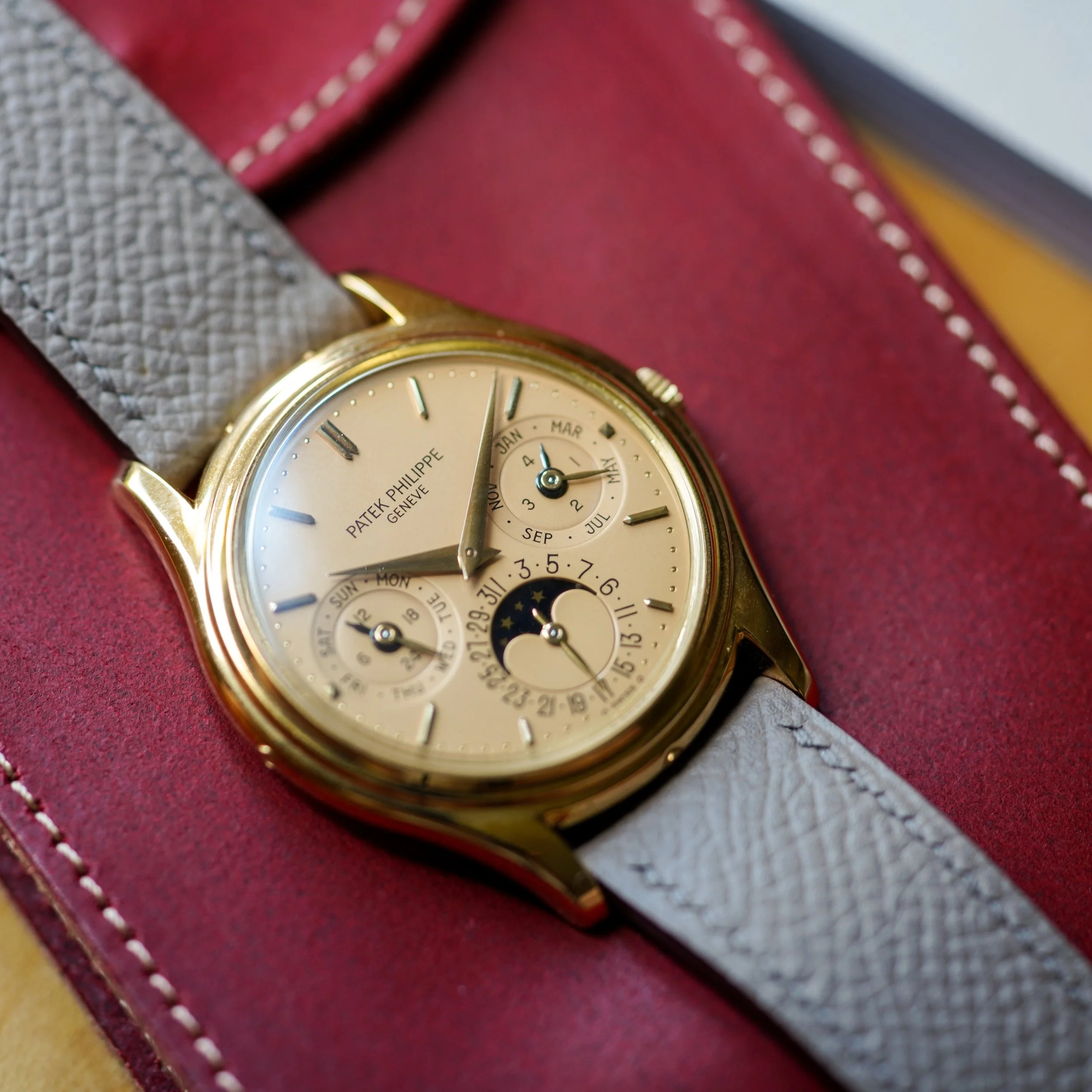
A neo-vintage Patek Philippe ref. 3940 with an exceedingly rare “Dore” dial. Reference 3940 was produced between 1985 and 2007.
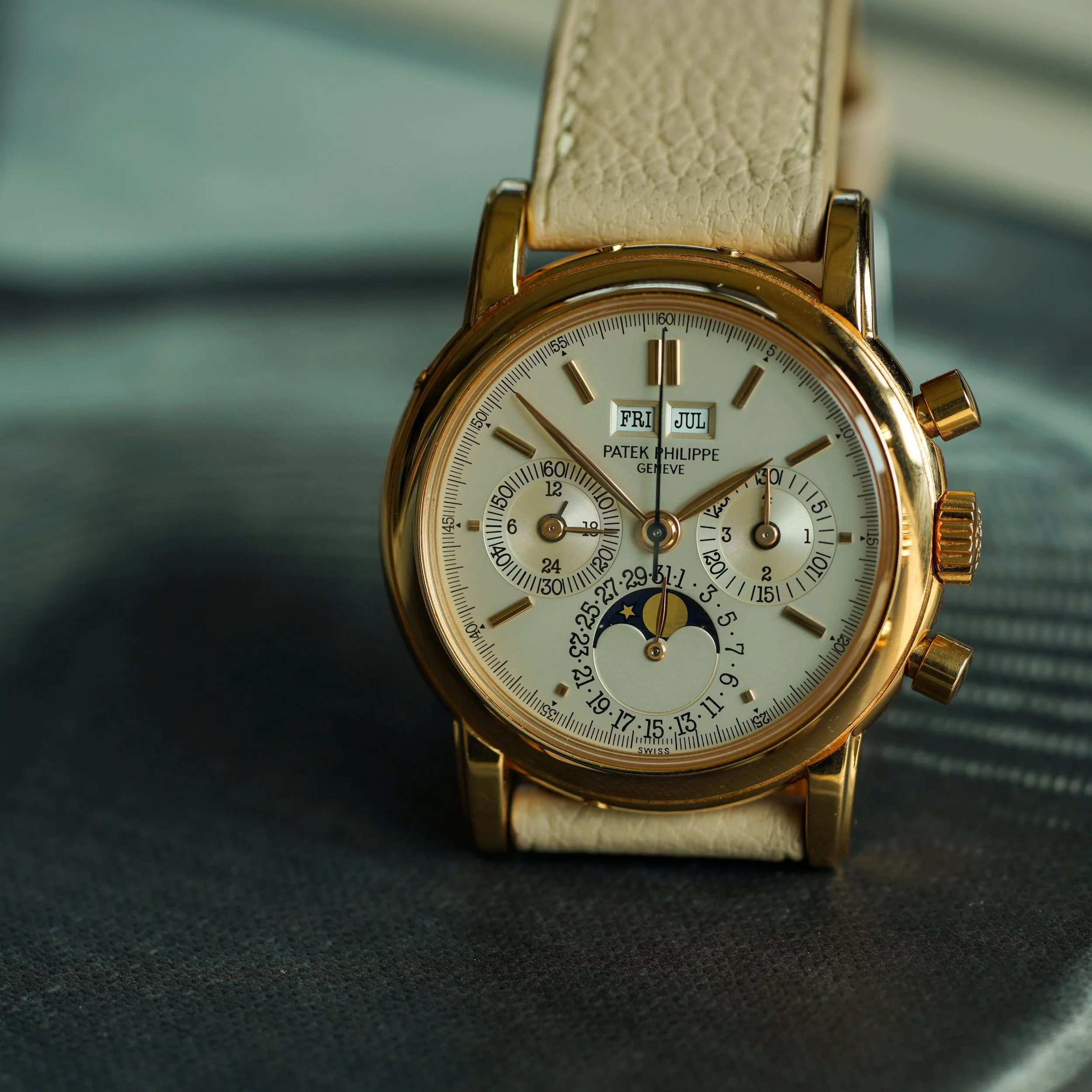
A neo-vintage Patek Philippe ref. 3970 - second series in pink gold. Reference 3970 was produced between 1986 and 2004.
We can also look at other important references and models such as the Breguet 3357, as mentioned previously, and discuss why they should be considered neo-vintage. Importantly, I believe some Lange watches should also be considered neo-vintage and, with their first set of contemporary releases being in 1994, it is only natural to view the 1990’s as part of the neo-vintage era.
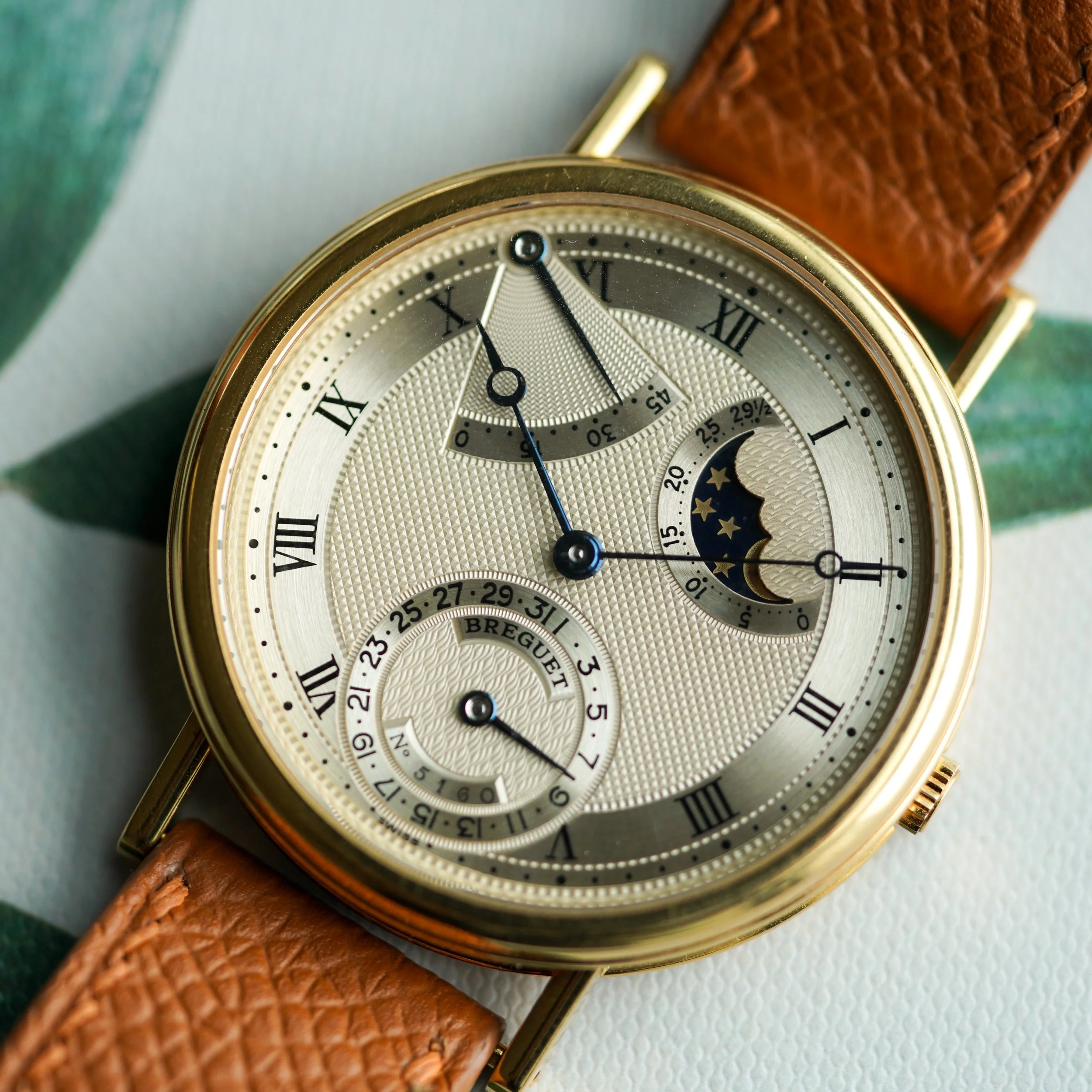
A “neo-vintage” Breguet ref. 3130. The reference was introduced in the early 1980’s, and this particular example is from the 1990’s.
On the other hand, watches released after the turn of the millennium were often more experimental in the materials used and featured bolder overall designs and typography. But again, while the distinction of “vintage” watches may stay the same for some time to come, what is categorised as “neo-vintage” will shift more freely as time passes and more watches are released.
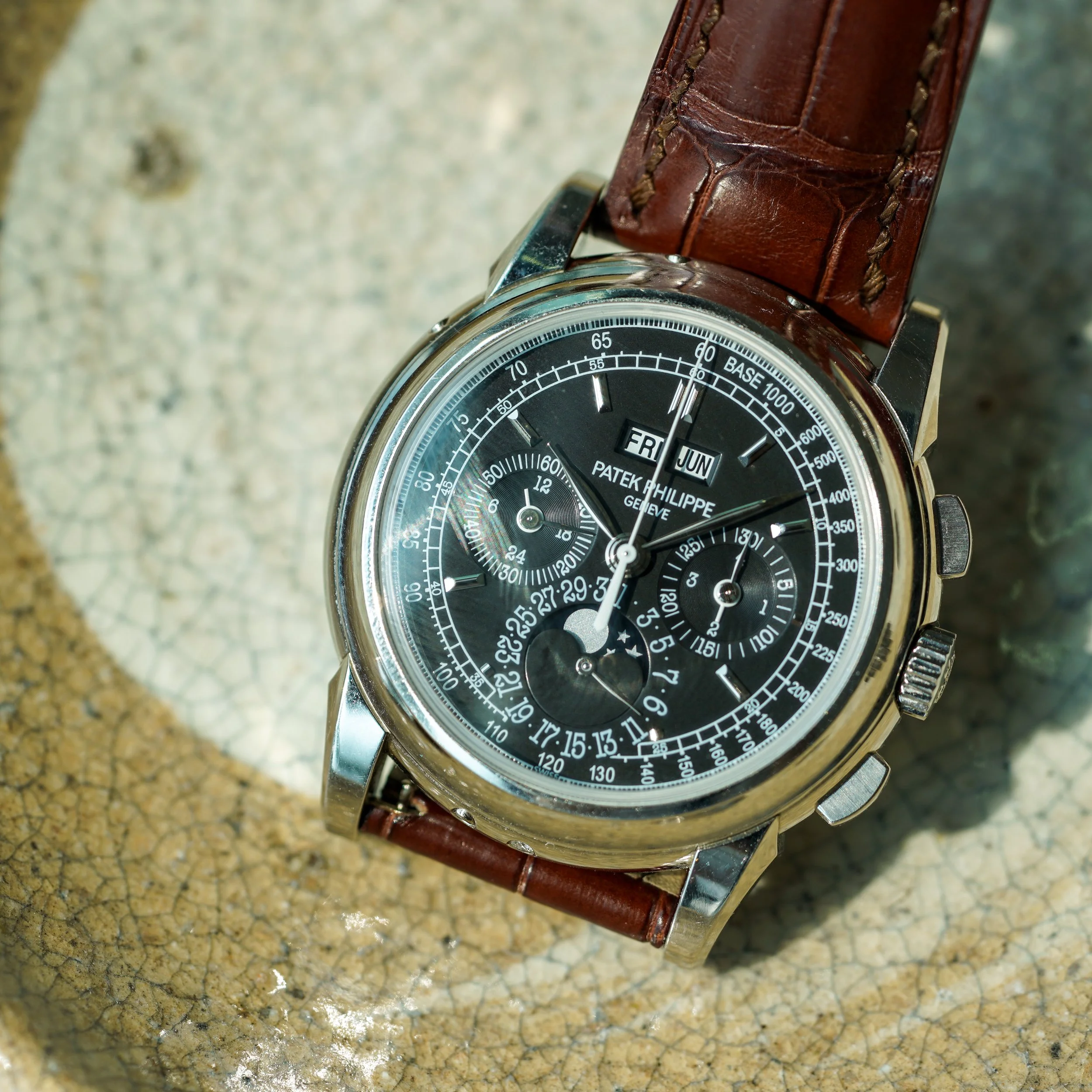
Patek Philippe 5970P, another modern classic that may soon be considered neo-vintage.
Relevance Today
There are certainly modern watches that inherit the design elements and production qualities of vintage and neo-vintage watches (we see it especially with the rise of independent watchmakers who I believe do a great deal to keep the vintage spirit alive). We should always remember that the idea of wearing mechanical watches - whether they be vintage, neo-vintage, or modern - is romantic and non-utilitarian; higher beat rates and fancy mechanisms such as tourbillons may bring marginal improvements in precision but cannot compete against modern computer-based technology. So, if vintage watch collecting is a romantic endeavour to keep in line with the vintage spirit - appreciating things that are made slowly by hand with individual character and human warmth - then perhaps the literal age is not the only factor to consider.
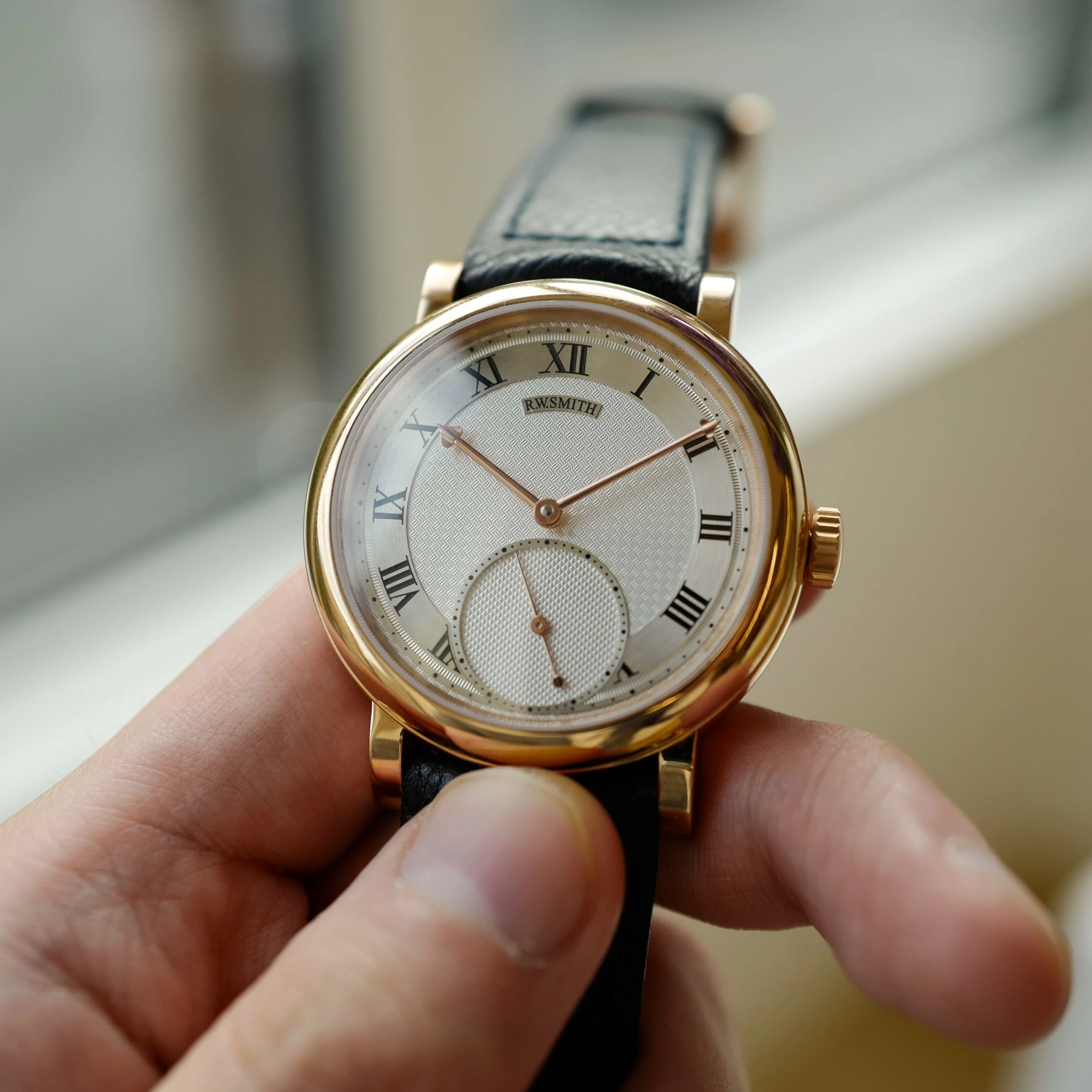
A “modern” watch made by the venerable independent watchmaker Roger Smith. Though modern, this watch carries on the spirit of classical watchmaking.
Of course, my personal take is that the time before CAD softwares represents the purest expression of this romanticism. This was when every step of the process of watchmaking involved a very personal human touch. Collecting the watches made during this time is more than just assembling a collection of objects - it’s about appreciating the philosophy of an era bygone. I couldn’t express this idea better than the inimitable auctioneer Mr. Aurel Bacs did in his video with Mr. Porter - “Vintage watches bring us back to times that we miss - times when things maybe weren’t perfect, but done with love.”
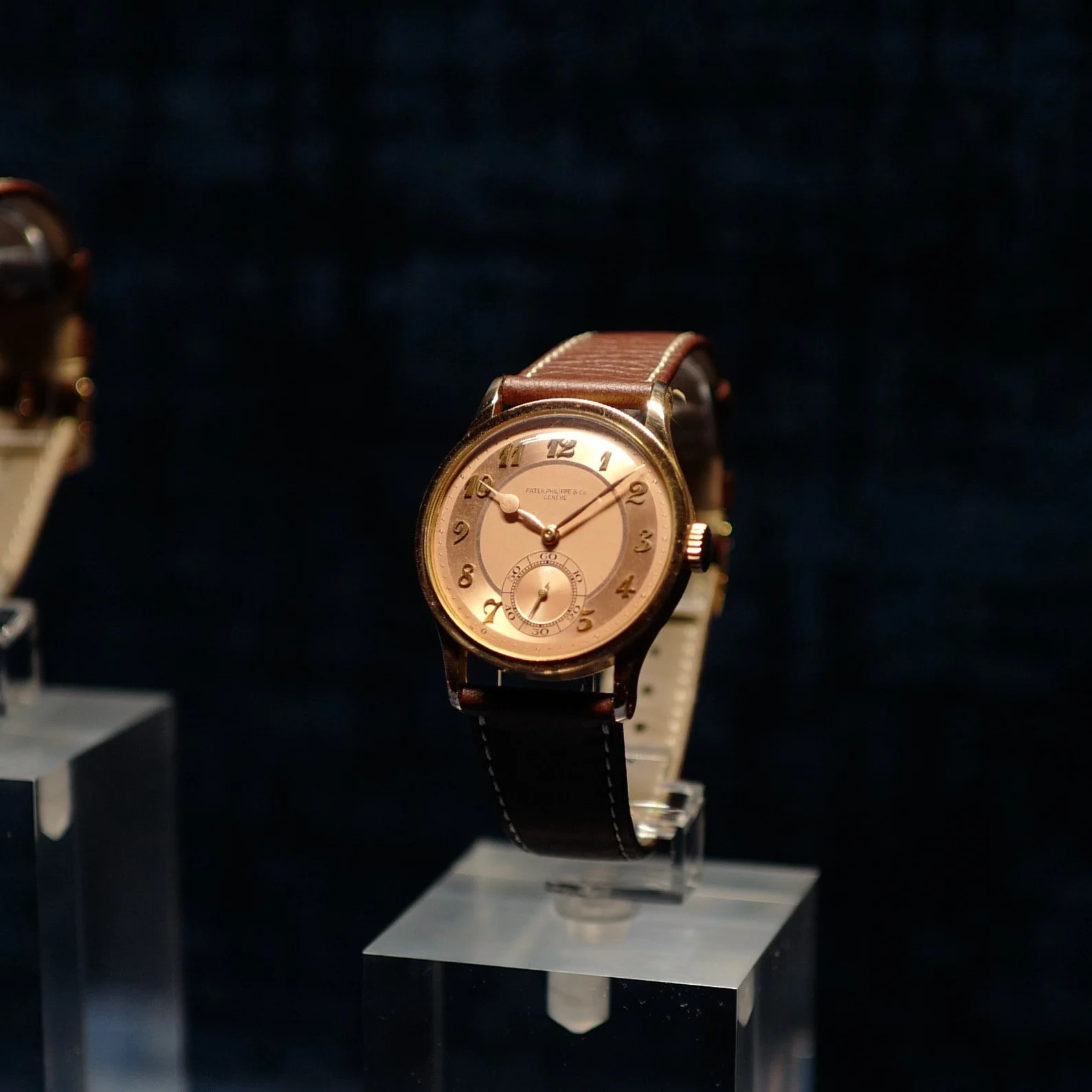
An exceedingly rare Patek Philippe ref. 570 in pink gold from the 1930’s, on exhibition in London as part of the OAK collection.
At the end of the day, definitions are only there as a guideline and vintage watch collecting should be an extremely personal journey. I would argue that it’s the collector’s approach, attitude, and philosophy that matters more than the watches he owns and when they are made. I firmly believe one does not necessarily need to own many “vintage” pieces to be respected as a truly passionate vintage watch connoisseur.