On Watch Photography
For the first post of 2026, I would like to talk about something that is so inseparable from the modern experience of collecting watches. Watch photography, and keeping visual record of important moments with the watches, can be almost as important as the watches themselves.
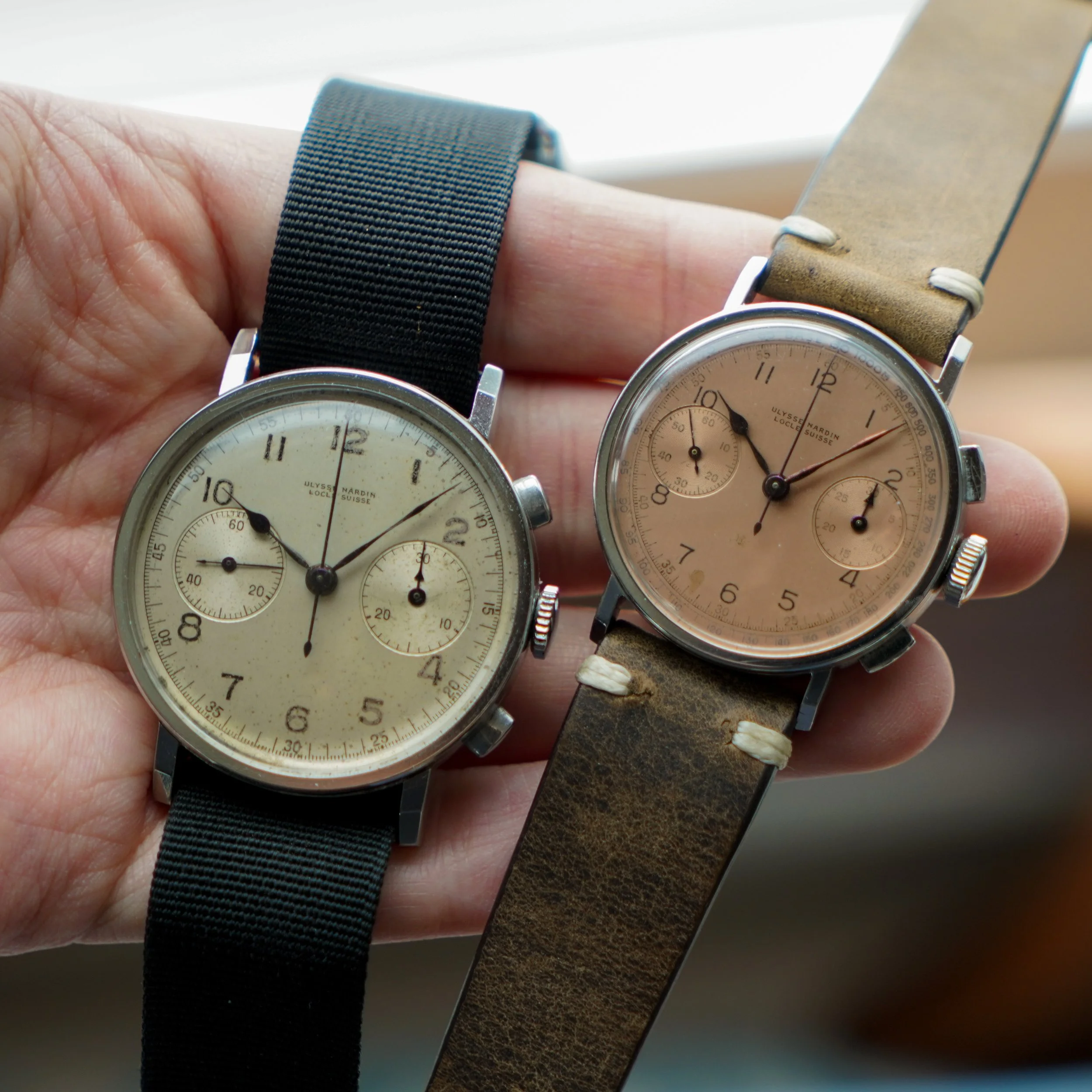
A pair of Ulysse Nardin pilot-style chronographs. The shot was taken to convey the colour and size differences, from the viewpoint of the collector who is admiring the accomplishment of bringing the pair together.
I would never describe myself as a great photographer, but I’ve always had a passion for photography. Each time I traveled, my camera most definitely accompanied me. During COVID, when I was still a doctoral student in the UK, I started to post watches more regularly and seriously on Instagram. I discovered that photography was not only a great way to keep record but also a powerful tool to help me connect to other serious collectors around the world.
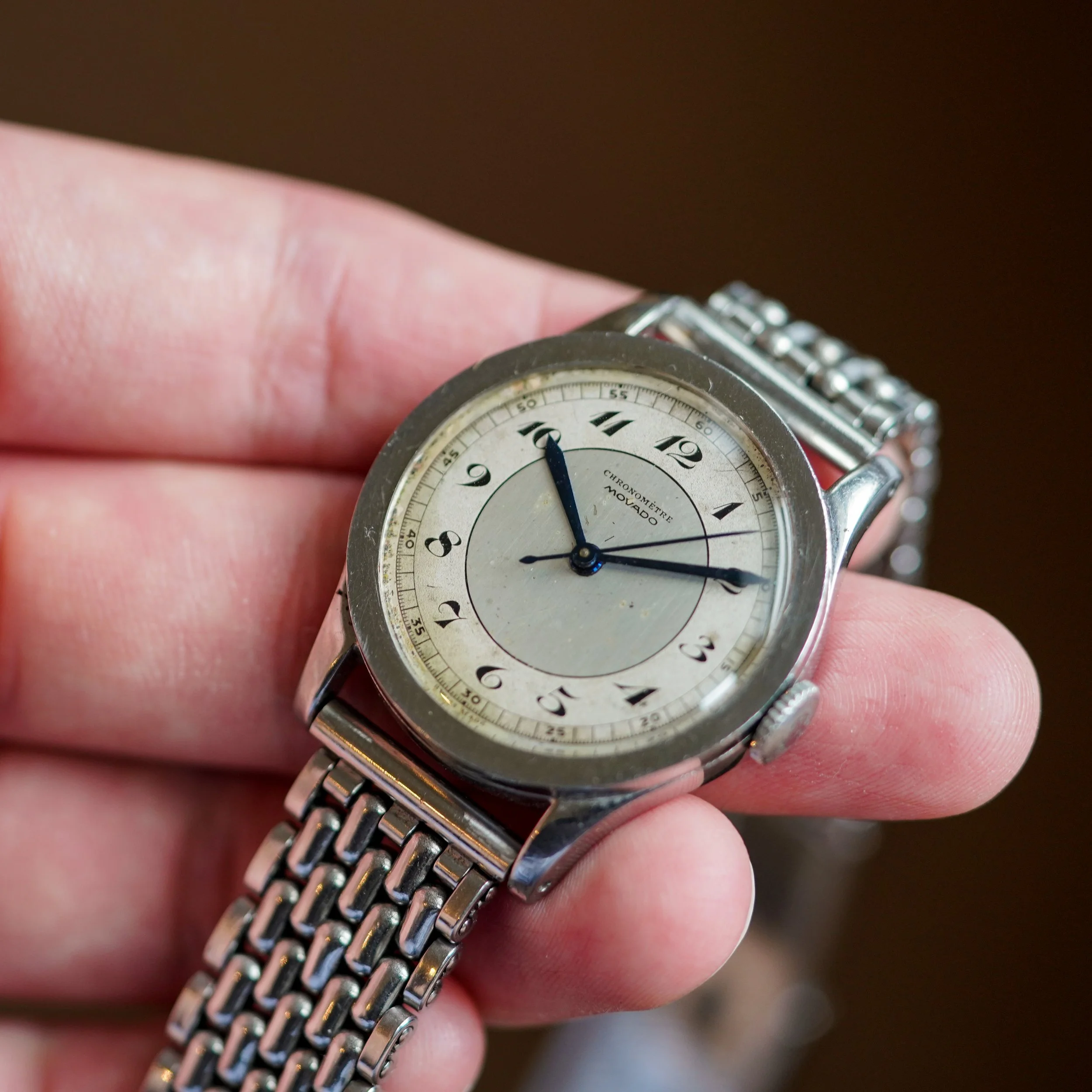
A diminutive Movado calatrava with a lovely dial, belonging to Jacob (@hillman.watches). The watch was angled to highlight the two-tone effect of the bullseye dial - the most noticeable feature of the watch when handling it in the flesh.
“Buy what you like.” is probably the phrase that is the most mentioned in the world of watch collecting, and I also believe this to be a great guiding principle. My choice of watches has always been closely tied to my personal style and the type of lifestyle I pursue. Interestingly, I believe this also extends to watch photography. Watch photography should reflect the context in which the watches are used, and therefore it should convey the colours and vibes of the user’s lifestyle.
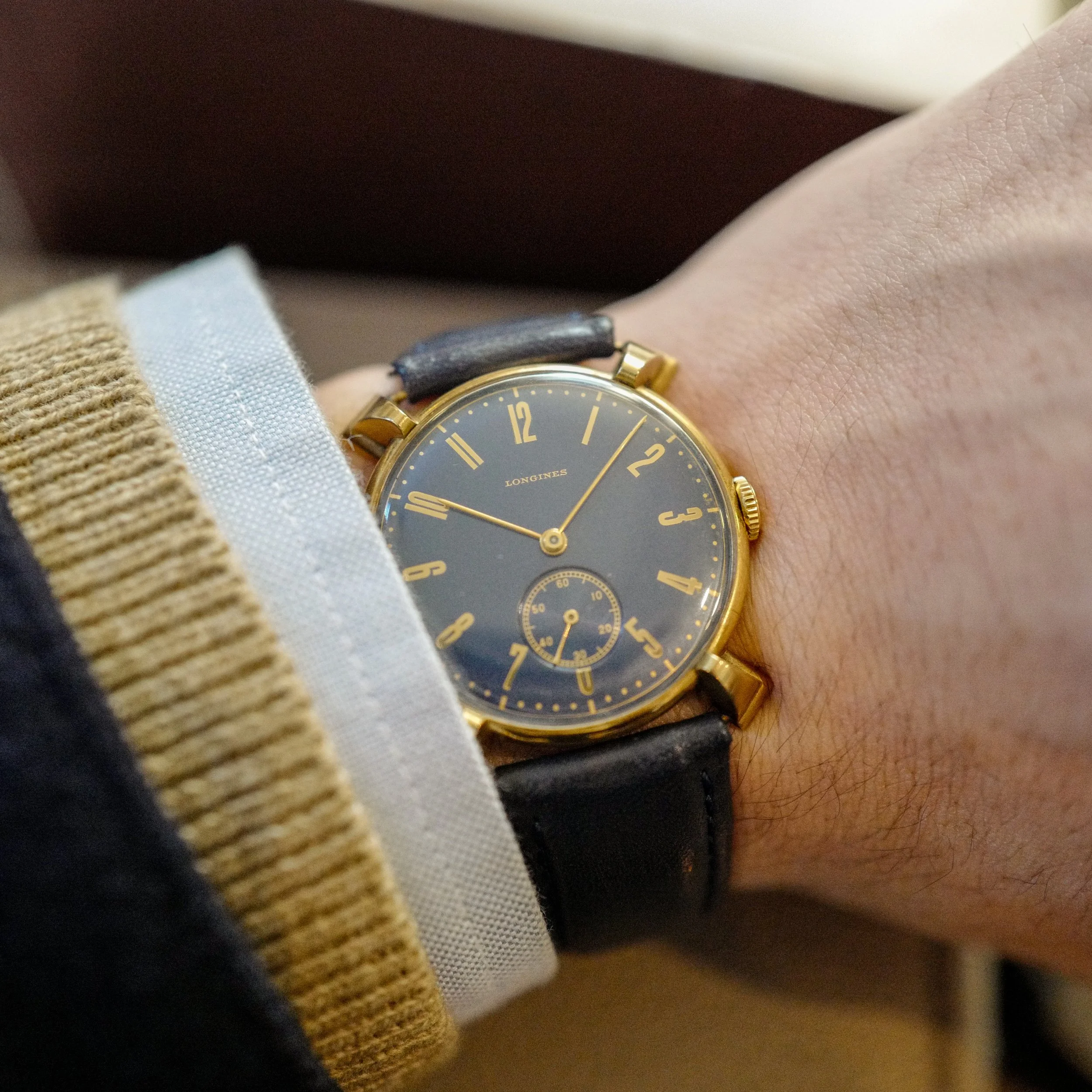
A lovely and unique Longines belonging to Matt (@vintagelongines). The outfit mirrors the colours present in the watch.
So, in my own watch photography, I try to avoid studio-like shots - even if they may give sharper and more accurate details - in order to try to portray my watches in the context of daily life and actual use. Rather than trying to remove all highlights, shadows, and reflections, I tend to embrace them. My foremost goal is to create a portfolio that most realistically conveys the sensation of using and living with these watches day to day.
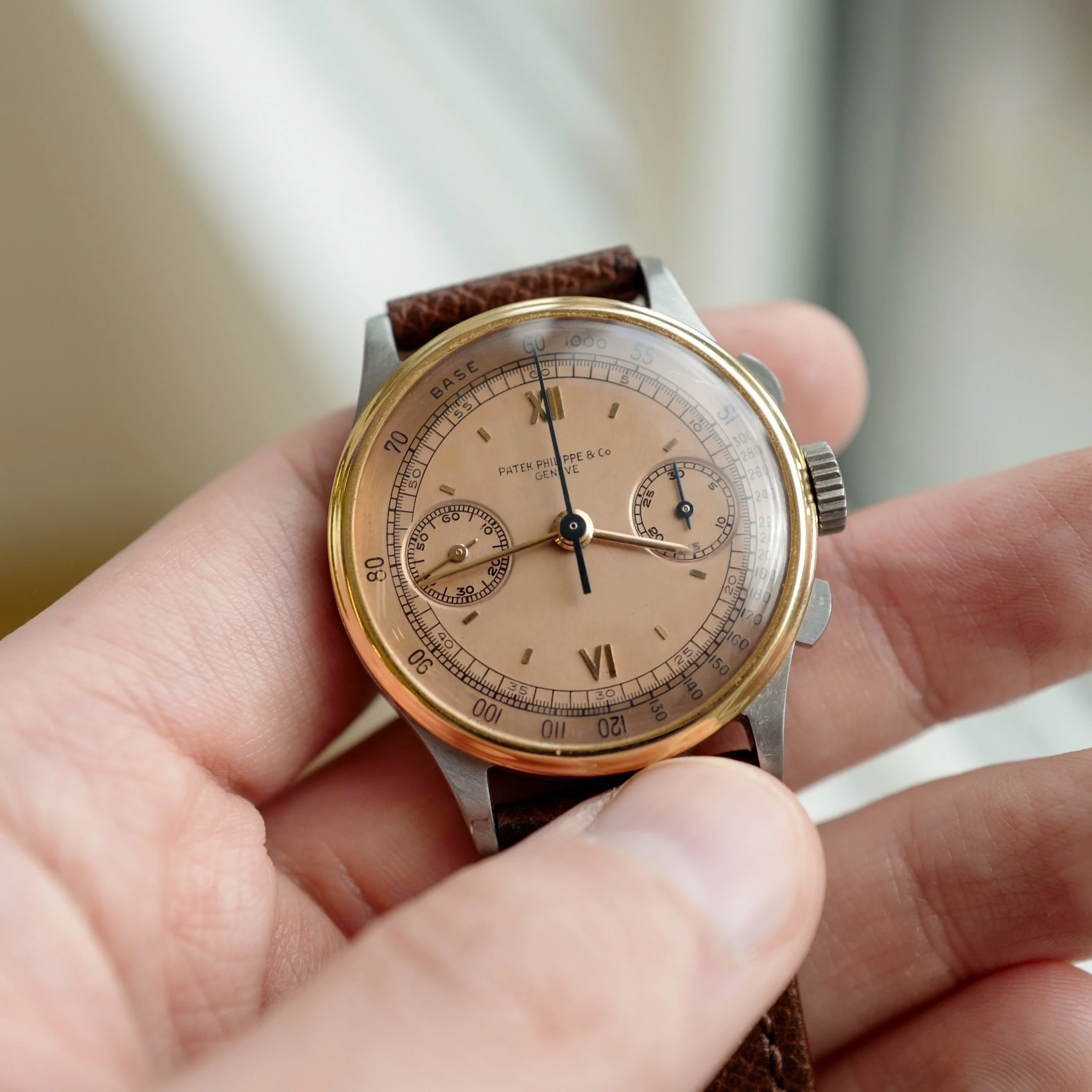
A very rare Patek Philippe chronograph ref. 130, with a two-tone case and a two-tone salmon dial. Photographed to highlight the warmth of the dial and the two-tone features of the watch.
Of course, there is no one right style - if I were a professional dealer, I would very much, by necessity, have studio-like photos of each watch from every angle. In the context of dealing watches, it is crucial to portray the watches as objectively as possible. I believe the same principle holds true - to some extent - in the context of running a watch museum. So, for the Rarefied Seoul museum, I do plan to create a virtual portfolio and library, where visitors can check out 360-degree views of each watch that is displayed in the museum.
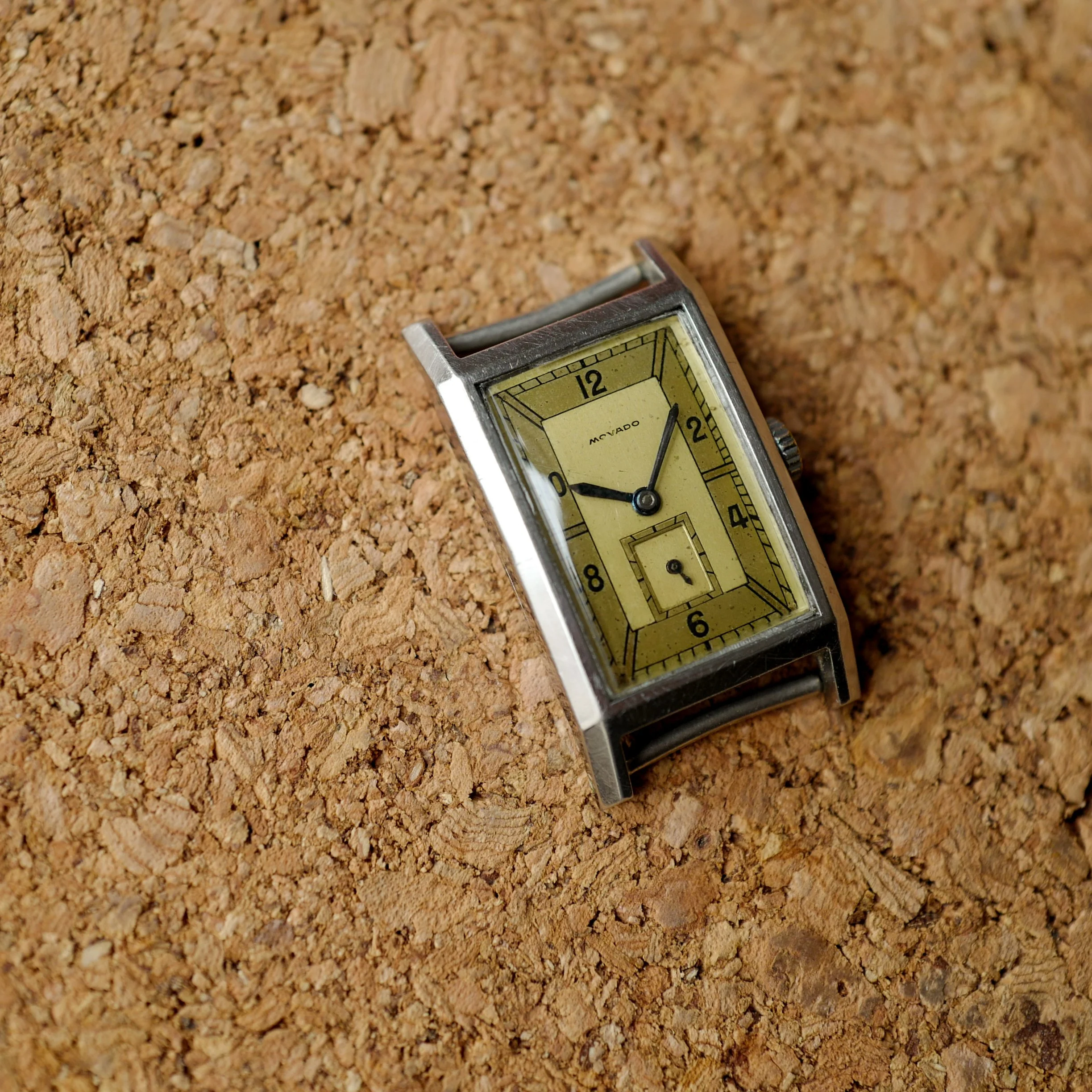
A Movado tank in stainless steel with a lovely two-tone sector dial. Photographed on a cork panel in order to convey the watch’s ruggedness.
With all this being said about my personal inclinations, I do sincerely believe the variety of style and viewpoints is critically important. When I ask contributors for an article, I always urge them to take their own photos in their preferred style. Recently, Scott (@acierinox_watches) did very well to do this with his piece on watch straps. My personal style will always be the backbone for Rarefied Seoul, but going forward - with help from collaborators - I look forward to expanding the style of watch photography on display on the website.
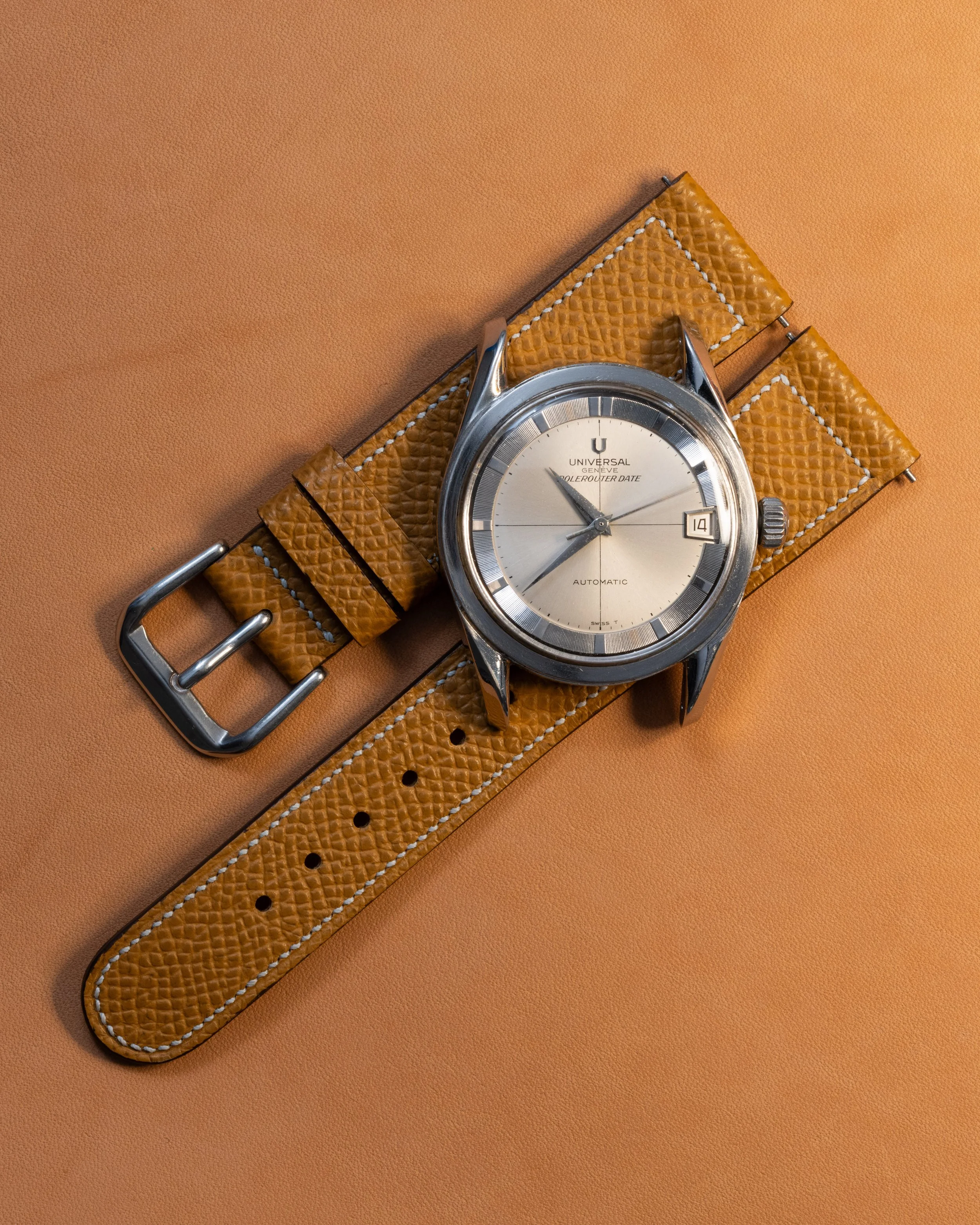
A Universal Geneve polerouter, photographed by Scott (@acierinox_watches).